Technology · Article
Data Centers: Why Power, Not Chips, Is the Real Bottleneck for AI Growth
Published:
In brief
Data centers are the physical buildings that store, process and move the data behind AI chatbots, cloud storage and streaming services. The sector has become a global flashpoint in October 2026 after Microsoft withdrew as anchor tenant from the UK's largest planned AI data center because the local power grid cannot supply it until the 2030s.
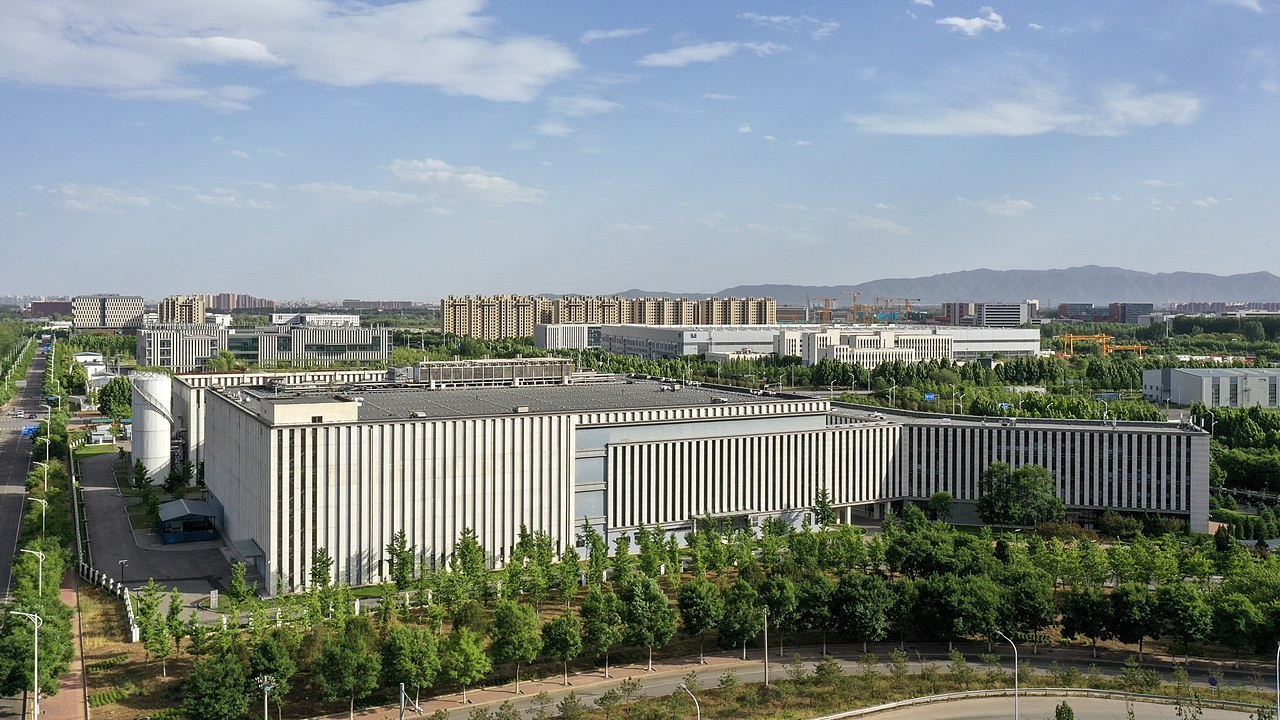
A data center is a dedicated facility packed with servers, storage drives and networking equipment that run the software behind everyday digital life: web search, video streaming, online banking and, increasingly, AI models that answer questions or generate images. Cloud providers such as Microsoft, Amazon and Google rent out capacity in these buildings to companies and individuals around the world.
The buildings themselves are not the constraint anymore. What has become scarce is the electricity needed to run them, and that scarcity is now derailing projects that governments had promoted as flagship investments.
What happened in Essex
Microsoft has withdrawn as the anchor tenant of a data center planned by British firm Nscale in Loughton, Essex, according to reporting by the Telegraph relayed by Reuters and separately confirmed by the Guardian. The site had been promoted by UK ministers in 2025 as the country's largest AI data center project.
The reason, according to both outlets, is electricity supply. UK Power Networks told Nscale it could not guarantee a grid connection for the site until the early to mid-2030s, far later than the facility's original target opening. The Guardian had already reported in March 2026 that the Loughton site was still an operational scaffolding yard, raising doubts about the timeline.
An Nscale spokesperson said the company remains committed to the Loughton project and is exploring alternative power sources, describing the shortfall as a London-wide grid issue rather than one specific to the site. The spokesperson added that the setback has not affected Nscale's other contracts with Microsoft, including a separate project in Norway.
We remain committed to both the Loughton project and the UK, and we are exploring alternative power sources for the site.
The timing is sensitive for Nscale, which filed last month to go public in the United States seeking up to roughly $3 billion, according to the technology outlet The Next Web. Microsoft and Anthropic are listed as accounting for about 85% of Nscale's contracted business in its IPO filing. The Next Web also reported that Nscale's Norwegian site is six months behind schedule, with only 6.4 of a planned 30 megawatts operational so far, and that only its West Virginia campus currently has a signed letter of intent with Microsoft, rather than an executed agreement.
Why power has become the bottleneck
The Loughton case illustrates a wider pattern described by industry analysts: AI data centers are increasingly limited by grid capacity rather than by the availability of computer chips. Research firm Gartner, cited by technology analysis site Enki AI, projects that 40% of AI data centers will be constrained by power availability by 2027.
According to the same analysis, lead times for high-voltage transformers have stretched to two to four years, and building new high-voltage transmission lines can take over a decade once permitting and construction are included. Goldman Sachs projections cited by Enki AI put US data center power demand growth at a 15% compound annual rate through 2030, with data centers consuming 8% of all US electricity by that year.
The International Energy Agency's Electricity 2026 report states that data center expansion is expected to account for about half of the total increase in US electricity demand through 2030. The same report projects EU electricity demand to grow by about 2% a year through 2030, driven in part by data centers alongside industrial activity, electric vehicles and other uses.
A global, not just a UK, problem
Enki AI's analysis also notes that established US data center hubs such as Northern Virginia and Silicon Valley already face acute power constraints, pushing developers toward secondary regions with spare grid capacity. The broader AI infrastructure financing sector, sometimes called the 'neocloud' industry, has also faced investor pressure: The Next Web reported that shares in rival cloud-compute firm CoreWeave fell 25% in one week in October 2026, and that Australian firm Firmus abandoned its own IPO plans.
| Metric | Figure | Source |
|---|---|---|
| AI data centers facing power constraints by 2027 | 40% | Gartner, via Enki AI |
| US data center share of electricity demand growth to 2030 | ~50% | IEA, Electricity 2026 |
| US data center electricity demand CAGR through 2030 | 15% | Goldman Sachs, via Enki AI |
| US data centers' share of total electricity use by 2030 | 8% | Goldman Sachs, via Enki AI |
| Loughton, Essex grid connection availability | Early-to-mid 2030s | UK Power Networks, via Reuters/Guardian |
| Nscale Norway site operational capacity | 6.4 of 30 MW planned | The Next Web |
What it means for AI users
For people who use AI chatbots or cloud services, the immediate effect is indirect: no service has been shown to be disrupted by the Loughton withdrawal. But the episode shows why some AI providers have warned of slower capacity rollouts or higher costs, since new data centers increasingly depend on securing grid connections years in advance, or on companies building their own on-site power generation.
Nscale says it is still pursuing the Loughton site and other UK locations while it looks for alternative power sources. Whether the project proceeds on its original scale, and when, will depend on decisions by UK grid operators that are outside any single company's control.
Questions
- Why did Microsoft pull out of the Essex data center project?
- According to Reuters and the Guardian, Microsoft withdrew as anchor tenant because UK Power Networks said it could not guarantee the site a grid connection until the early to mid-2030s, far later than the project's original timeline.
- Is the Loughton, Essex data center project cancelled?
- No. Nscale, the UK company behind the site, says it remains committed to the Loughton project and is exploring alternative power sources, while also looking at other UK locations.
- Why are AI data centers power-constrained instead of chip-constrained?
- Industry analysis cited by Enki AI says transformer lead times now run two to four years and new transmission lines can take over a decade to build and permit, making grid capacity, not computer chip supply, the main bottleneck for new AI facilities.
- How much of future electricity demand growth will data centers drive?
- The International Energy Agency's Electricity 2026 report projects that data center expansion will account for about half of the total increase in US electricity demand through 2030. The same report projects EU electricity demand to grow about 2% a year through 2030, with data centers as one of several drivers alongside industrial activity and electric vehicles.
- Does the Microsoft withdrawal affect Nscale's planned stock market listing?
- Nscale filed for a US IPO seeking up to roughly $3 billion, and Microsoft is listed alongside Anthropic as about 85% of its contracted business, according to The Next Web, meaning the loss of Microsoft as a Loughton anchor tenant raises questions for investors even though Nscale says its other Microsoft contracts are unaffected.
Sources
- AOL (mirroring The Guardian) — Microsoft drops huge AI datacentre project in Essex over power supply concerns
- Euronext Live (mirroring Reuters) — Microsoft pulls out of UK data center deal with Nscale, Telegraph reports
- The Next Web — Microsoft reportedly quits Nscale's UK data centre weeks before its IPO
- IEA — Electricity 2026 report
- Enki AI — Data Center Power Crisis 2026: The Grid Bottleneck
This piece was prepared with artificial intelligence and passed an automated source check before publication. If you see an error, ask for a correction. Request a correction or reply · How we make this
Related

TechnologyComparison
PlayStation 5 Pro vs a Matching Gaming PC: Price and Performance Compared
Sony launched the PlayStation 5 Pro at $699.99 in November 2024, but according to Engadget's reporting its US price had climbed to roughly $900 by April 2026, and one October 2026 SlashGear estimate puts it near $1,580. A PC built around the GPU and CPU that benchmarkers consider closest to the console costs roughly $1,050 to $1,530 depending on the parts chosen, according to SlashGear and BGR testing.
TechnologyNews
Two Critical PHP Flaws Dubbed "PHP2Shell" Expose Most of the Web
Two critical PHP vulnerabilities nicknamed "PHP2Shell" let attackers run malicious code on web servers without logging in, according to the security firm that found them. Patches for CVE-2026-109618 and CVE-2026-109619 shipped on October 21, 2026, months after researchers first reported the bugs, and multiple firms have since logged exploitation attempts in the wild.

TechnologyList
Best Android Apps and Utilities You Can Get Outside Google Play Store
Android users are not limited to Google Play: the open-source repository F-Droid, the anonymous Google Play client Aurora Store, the update tracker Obtainium, and the Shizuku-based catalog ShizuStore all distribute apps that the official store does not list or allow. Here are nine stores and utilities worth knowing, based on their own listings and reporting from MakeUseOf and Pocket-lint.
TechnologyArticle
PHP2Shell: the two critical PHP flaws that pushed governments offline
PHP2Shell is the nickname for two critical, unauthenticated remote-code-execution flaws in the PHP programming language — CVE-2026-109618 and CVE-2026-109619 — disclosed on 20–21 October 2026. Because PHP powers a very large share of the world's websites, the flaws led several governments to take public sites offline as a precaution. The official fix is upgrading PHP; interim server-side mitigations exist, but there is little an individual reader can do beyond watching for breach notices and using strong, unique passwords.