The Renaissance was a period of renewed interest in classical Greek and Roman learning that began in Florence in the 14th century and reshaped European art, science and thought through the 1600s. It introduced techniques such as mathematical perspective and oil painting, inspired the philosophy of humanism, and set the stage for the later Scientific Revolution.
The movement began in Florence, Italy, in the 14th century and first spread to other Italian city-states such as Venice, Milan, Bologna, Ferrara and Rome, before reaching France and the rest of western and northern Europe during the 15th century, according to History.com and the World History Encyclopedia. Economic prosperity in Italian city-states and renewed study of ancient Greek and Roman texts created the conditions for the shift.
Humanism: the intellectual core
At the center of the Renaissance was humanism, an intellectual movement that drew on classical Greek and Roman literature, architecture and art to generate ideas applicable to the contemporary world, according to the World History Encyclopedia. The Musée protestant, a museum focused on the history of Protestantism, describes humanism more broadly as a movement combining renewed study of ancient Greek and Latin texts with growing interest in the arts, sciences, and questions of governance and education.
Humanism originated in Florence during the era of the Medici family and then spread across Europe, according to the Musée protestant. In the Netherlands, the Rotterdam-based scholar Erasmus (1469–1536) became an influential humanist voice; in France, Guillaume Budé (1468–1540) advised King Francis I, who went on to found the Collège de France; in England, humanist education shaped writers including Thomas More (1478–1535).
The Musée protestant also links humanist scholarship to the Reformation: the close study of biblical languages that humanists promoted made new vernacular translations of scripture possible in German, French and English, and both Martin Luther and Jean Calvin were shaped by humanist education.
A new visual language in art
Renaissance art developed over roughly 1400 to 1600 and introduced techniques that changed how painters and sculptors represented the world, according to the World History Encyclopedia. Artists adopted mathematical perspective to create convincing depth on a flat surface, increasingly worked in oil paint rather than tempera for richer color and tone, and used light-and-shadow techniques such as chiaroscuro and sfumato.
The shift built on earlier experiments by artists such as Giotto (died 1337), who began exploring more realistic figures before the Renaissance proper. By the late 15th and early 16th centuries, the movement produced three towering figures: Leonardo da Vinci (1452–1519), Michelangelo (1475–1564) and Raphael (1483–1520).
Renaissance art: figures and signature works
Artist
Dates
Known for (per sources)
Leonardo da Vinci
1452–1519
Mona Lisa (c. 1506); The Last Supper
Michelangelo
1475–1564
David (1504); Sistine Chapel ceiling (1512)
Raphael
1483–1520
School of Athens fresco (1511)
Sandro Botticelli
1445–1510
Birth of Venus (c. 1484)
Donatello
c. 1386–1466
Bronze David; wooden Mary Magdalene
Patronage was essential to this output. The Medici family, especially Lorenzo de' Medici (1449–1492), backed artists and thinkers in Florence and built a collection of ancient art that other artists studied, according to the World History Encyclopedia. The Medici ruled Florence for more than 60 years and were among the movement's most prominent backers, according to History.com. The Catholic Church was the other major patron, commissioning altarpieces and frescoes for churches and chapels, according to the World History Encyclopedia.
Printing, science and the road to the Scientific Revolution
Johannes Gutenberg's invention of a printing press using movable type, which History.com dates to the 1450s, allowed ideas — including humanist texts — to spread far more quickly across Europe than hand-copied manuscripts had allowed.
Scientific inquiry advanced alongside art and humanist scholarship. History.com cites Nicolaus Copernicus (1473–1543), who proposed that the Earth and other planets orbit the sun rather than the reverse, and Galileo Galilei (1564–1642), who used telescopes to observe Jupiter's moons and the rings of Saturn. The philosopher René Descartes (1596–1650) is described by History.com as a father of modern philosophy. These developments are generally seen as laying groundwork for the later Scientific Revolution.
Why the period waned
History.com attributes the decline of the Renaissance to several overlapping factors: wars disrupted Italian territories, shifting trade routes hurt the economic base that had funded patronage, and the Counter-Reformation brought tighter censorship of artists along with an Inquisition, established by the 1545 Council of Trent, that made challenging Church doctrine punishable by death.
A multifaceted, open approach to the world, humanity and the beauty of creation.
It began in Florence, Italy, in the 14th century and spread first to other Italian city-states and then across Europe through the 15th and into the 17th century, according to History.com and the World History Encyclopedia.
What is humanism and how does it relate to the Renaissance?
Humanism was an intellectual movement that drew on classical Greek and Roman literature, architecture and art, according to the World History Encyclopedia; the Musée protestant describes it as combining renewed study of ancient texts with growing interest in the arts, sciences and questions of governance and education.
How did the printing press affect the Renaissance?
According to History.com, Johannes Gutenberg's invention of the movable-type printing press in the 1450s let humanist and classical texts spread across Europe far faster than hand-copied manuscripts, accelerating the movement's reach.
Why did the Renaissance end?
History.com points to wars in Italy, disrupted trade routes, and Counter-Reformation censorship along with an Inquisition established by the 1545 Council of Trent as causes of the Renaissance's decline.
This piece was prepared with artificial intelligence and passed an automated source check before publication. If you see an error, ask for a correction. Request a correction or reply · How we make this
Long before European colonization, the African continent was home to powerful states that built pyramids, ran trans-Saharan gold-and-salt economies, and raised cities of carved stone. This list ranks seven ancient African kingdoms by the scale of their political, economic or architectural reach, based on dates and figures from historians, UNESCO and museum records.
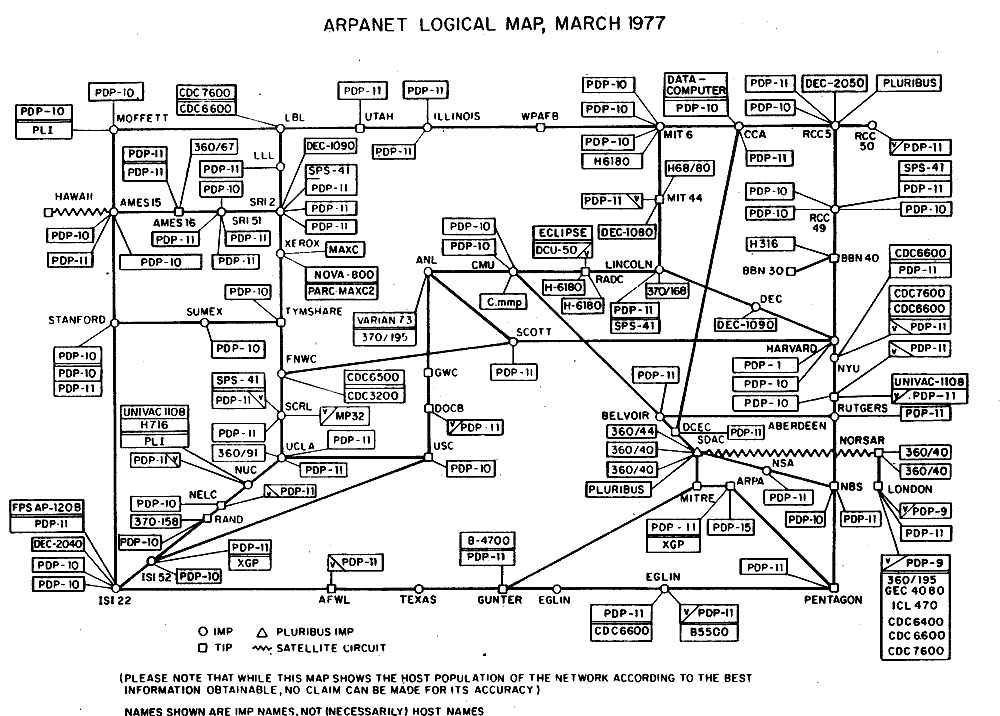
The internet began as a U.S. defense research network called ARPANET in 1969 and became the World Wide Web two decades later through a 1989 proposal at CERN. Today roughly 6 billion people — about three-quarters of the world's population — use the internet, according to the UN's International Telecommunication Union (ITU).
Archaeologists use two broad approaches: relative dating, which orders finds by layer or style without giving a year, and absolute (scientific) dating, which uses physical or chemical changes — such as carbon-14 decay, tree-ring patterns or potassium-argon decay — to estimate a calendar-based age range. Most sites are dated by combining several of these methods rather than relying on one alone.
Ancient Rome ran its affairs through elected magistrates, a senate of former officials and popular assemblies for roughly five centuries before power concentrated in a single emperor from 27 BCE. Its rigid social hierarchy, its legal code and its Latin tongue went on to shape European and wider Western institutions long after the empire itself fell.