To start a tabletop role-playing game like Dungeons & Dragons, you need a rules source, a character sheet and dice, then build a character in a handful of steps before a Game Master guides the group through a scene-decide-resolve loop. This guide walks through D&D's official character-creation steps and lists simpler alternative systems recommended for first-time Game Masters.
What a tabletop RPG actually is
In a tabletop role-playing game, each player controls one character while a Game Master (GM) describes the world, plays every other character, and applies the rules, according to a guide on running tabletop RPGs published by virtual-tabletop company Quest Portal. The same guide describes the core loop of play as a cycle: the GM describes a scene, the players decide what their characters do, and the group discovers what happens together as the GM adjudicates the results.
Dungeons & Dragons (D&D) is the best-known example of the genre, but it is one of many systems built on the same basic idea of collaborative, GM-led storytelling.
What you need before your first session
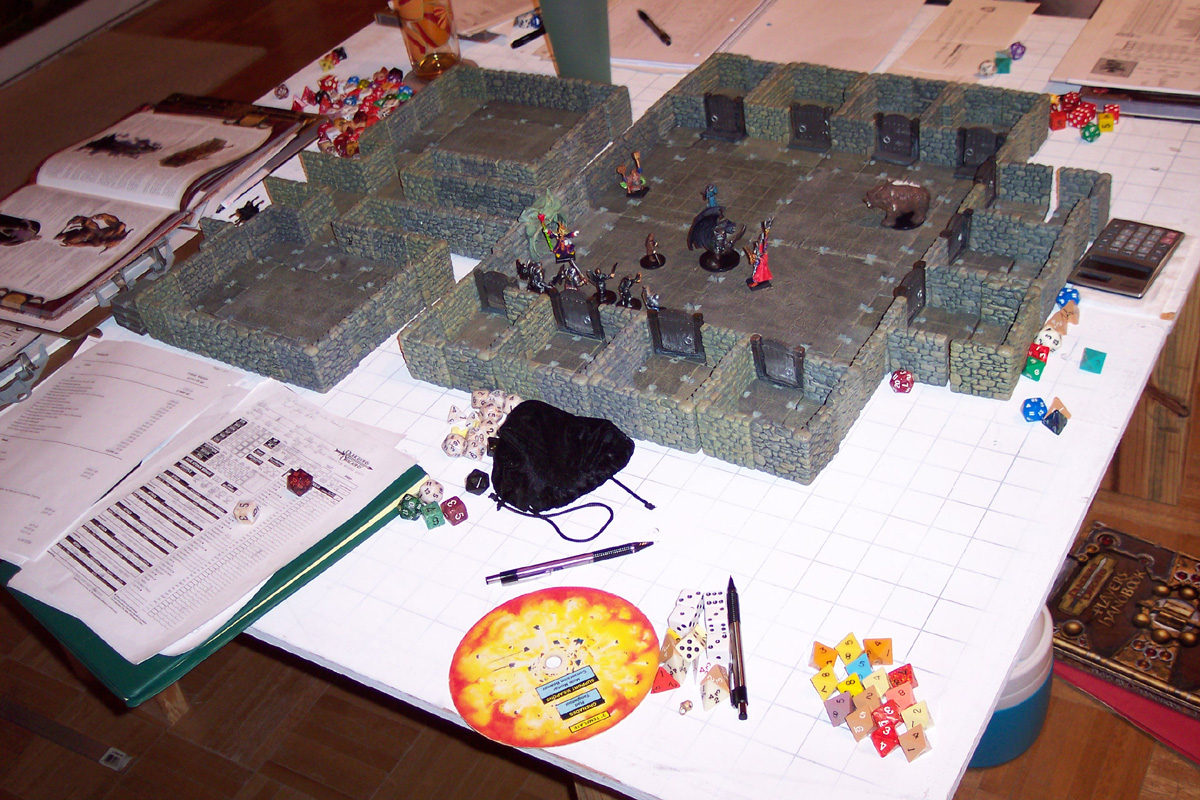
At minimum, a group needs a rules source (a published rulebook or an officially hosted version of the rules), a way to record each character's traits — a character sheet — and dice to resolve uncertain actions. D&D Beyond, the official digital toolset for D&D, hosts the 2024 edition of the Basic Rules online, including the chapter on building a character, and also offers digital and printable character sheets.
Creating a D&D character: the official five-step process
D&D Beyond's 2024 Basic Rules lay out character creation as a sequence of five steps, summarized below.
Choose a class from the twelve available — Barbarian, Bard, Cleric, Druid, Fighter, Monk, Paladin, Ranger, Rogue, Sorcerer, Warlock or Wizard — each with a different level of mechanical complexity and a primary ability.
Determine your character's origin by picking a background, a species, and two languages; backgrounds grant feat access, skill proficiencies and tool training.
Determine six ability scores — Strength, Dexterity, Constitution, Intelligence, Wisdom and Charisma — using the Standard Array (15, 14, 13, 12, 10, 8), a random method (rolling four six-sided dice six times and keeping the highest three dice from each roll), or a 27-point-buy system, then assign them to the six abilities.
Choose an alignment from nine options combining Lawful, Neutral or Chaotic with Good, Neutral or Evil.
Fill in the remaining details: calculate derived stats such as hit points, then choose starting equipment, spells (if applicable) and personality traits.
Hit points at level 1 are set by class plus the Constitution modifier — a Fighter, for example, starts with 10 plus their Constitution modifier, per D&D Beyond's Basic Rules. Starting gear comes from the chosen class and background, and 2024-rules characters also receive one free trinket.
A faster route: Quick Build
For players who want to start playing immediately, D&D Beyond describes a shortcut called Quick Build, which asks only for a species, a class and a name; the platform then automatically sets ability scores, proficiencies, languages and starting gear, producing a playable character in a few minutes, according to D&D Beyond's own walkthrough of the tool.
Basic gameplay: how a turn actually works
Once characters exist, play follows the scene-decide-resolve loop described by Quest Portal: the GM gives a sensory description of the situation, the players state what their characters attempt, and the GM uses the ruleset to adjudicate the outcome, often through dice rolls tied to a character's abilities. D&D Beyond's Basic Rules confirm that the system is built around rolling a 20-sided die and adding a proficiency bonus for trained skills, though the full mechanical detail of specific checks sits in later chapters of the rulebook rather than the character-creation section alone.
If D&D isn't the right fit: other systems recommended for first-time Game Masters
D&D is not the only option. Screen Rant published a list of nine tabletop RPGs it considers suitable for people running a game for the first time as Game Master; several of them are also built to be fast to learn for new players.
Tabletop RPGs for first-time Game Masters, per Screen Rant
System
Setting
What makes it beginner-friendly
Dungeons & Dragons 5th Edition
High fantasy
Most widely known system; extensive support including new-player kits and pre-written campaigns
Dungeon World
Fantasy, Powered by the Apocalypse
Character creation takes minutes; minimal GM prep required
Pathfinder
High fantasy
Beginner Box offers a simplified rules set plus a pre-written campaign with a guide to transition into the full game
Lady Blackbird
Steampunk-adventure, one-shot
Free download; rulebook is only 16 pages; comes with pre-written character sheets
Numenera
Science-fantasy
Character creation uses a simple verb-adjective-noun formula; designed to work in a single session
Tips for running or joining a first session
Quest Portal's guide for new Game Masters recommends keeping the first session small and manageable rather than preparing an entire campaign world.
Choose a short, self-contained adventure instead of building a full setting from scratch.
Agree on tone, session length and what everyone wants from the game before play begins.
Prepare only an opening scene, a handful of non-player characters, and a problem the characters can approach in different ways.
Stay ready to improvise when players choose an unexpected path.
Ask the group for feedback after the session to adjust the next one.
The other players decide what their characters do, and the group discovers what happens together.
— Quest Portal, guide on becoming a Game Master
Questions
Do I need to buy a rulebook to start playing D&D?
Not necessarily. D&D Beyond hosts the 2024 Basic Rules — including the character-creation chapter — for free online, and its Quick Build tool can generate a playable character from just a species, class and name.
What are the official steps to create a D&D character?
Per D&D Beyond's 2024 Basic Rules: choose a class, determine your origin (background, species, two languages), determine your six ability scores, choose an alignment, then fill in details like hit points, equipment and spells.
What does a Game Master do?
According to Quest Portal's guide, the Game Master describes the world, plays every non-player character, and applies the rules, running a loop where they narrate a scene, players decide what to do, and the GM adjudicates the outcome.
What if I don't want to play D&D specifically?
Screen Rant's list for first-time Game Masters includes alternatives such as Dungeon World and Lady Blackbird (character creation in minutes, a free 16-page rulebook), Numenera (designed for single-session play), and Pathfinder's Beginner Box with simplified rules.
How long does it take to make a character?
Using D&D Beyond's Quick Build, a complete character can be made in a few minutes by choosing only a species, class and name; Screen Rant similarly notes that Dungeon World's character creation takes only minutes.
This piece was prepared with artificial intelligence and passed an automated source check before publication. If you see an error, ask for a correction. Request a correction or reply · How we make this
Professional esports careers extend far beyond players: coaches, analysts, managers and production staff all hold paid roles inside team structures. Entry typically runs through ranked ladders, amateur leagues, academy rosters or open qualifiers, while pay, contracts and worker protections differ sharply by game, league and region.
Pick a board game by matching three factors in order: the player count your group actually uses most often, a complexity ("weight") level at or below what your players have already enjoyed, and a style — cooperative, competitive, or party — that fits how the group likes to interact. Getting any one of these wrong is the most common reason a new game ends up unplayed on a shelf.
An estimate circulating ahead of Grand Theft Auto VI's November 19, 2026 launch claims US employers could lose $1 billion in productivity as roughly 1.5 million workers skip work. The figure, credited to Spanish economist José García Montalvo, has been reported by multiple outlets but is not an official economic study, and some outlets say its own arithmetic does not add up.
A video game genre classifies a game by how it is played — its core mechanics and objectives — not by its setting or story. The widely used main categories are action, adventure, role-playing, strategy, simulation, sports and puzzle, and most modern titles combine several of them. Global survey data shows action and puzzle games are the top two favored genres in nearly every country measured.