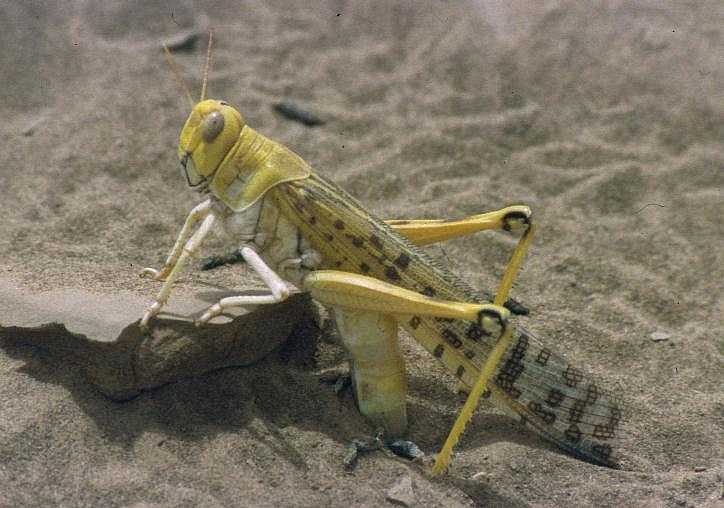
Posts circulating in Turkish- and Arabic-language media this month describe a 64-kilometer-wide desert locust swarm made up of billions of insects as though it were breaking news. The UN Food and Agriculture Organization (FAO) has not reported a new swarm of that size in 2026. What the FAO has confirmed is a separate, real outbreak that began in 2025 in Mauritania and has since spread into Morocco and Algeria.
Where the '64-kilometer' claim comes from
The viral figure traces back to footage used in the BBC's Planet Earth documentary series, filmed in Mauritania, and to a locust infestation across West and North Africa in 2003-2005, according to the Turkish outlets Onedio and Ortadogu Gazetesi, which both published the number without linking it to a current event.
The closest documented match for a swarm of that scale comes from Kenya in 2020. The FAO measured one swarm there at up to 60 kilometers long and 40 kilometers wide - roughly the size of Luxembourg - holding an estimated 20 billion locusts, according to a Carbon Brief review of FAO data. That outbreak was described at the time as the worst in 70 years for Kenya and in 25 years for Ethiopia and Somalia. The 60-by-40-kilometer figure differs from the 64-kilometer width circulating online now, an example of an older data point being presented as new.
The outbreak actually under way in 2025-2026
According to the FAO's Plant Production and Protection division, a first generation of locust hoppers appeared in Mauritania in August 2025, followed by a larger second generation in October. The FAO said unusually wet conditions in December 2025 and January 2026 created favorable breeding conditions for a third generation.
By March 2026, adult locusts and small swarms had moved from Mauritania toward southern Morocco, reaching the Tan-Tan area, according to the Moroccan outlet Hespress, which said authorities had not recorded major crop damage at that point. By May, groups had reached Agadir and Errachidia, with forecasts of further movement toward eastern Morocco, western Algeria and back into Mauritania, Express FM Morocco reported, citing Morocco's Interior Ministry as saying the situation remained under control through ground and aerial spraying. By June, the FAO reported widespread hopper groups and bands across Morocco, including mature adult groups along the Draa Valley, with migration toward Algeria, Mauritania and the Sahel expected in June and July.
Crops and food security at stake
In southern Morocco, swarms have moved through wheat- and barley-growing areas in the Souss-Massa region near Agadir, as well as Guelmim and Tata, and into northwestern Algeria, according to the agricultural trade outlet FreshPlaza. In March 2026 the FAO classified the situation as not yet a large-scale invasion but said the risk of further spread was high.
In Mauritania, the outbreak threatens irrigated rice and flood-recession farming along the Senegal River, as well as rainfed cereals and pasture land, according to a December 2025 analysis by the Famine Early Warning Systems Network (FEWS NET). The same analysis said production losses in Mauritania's Trarza region remained below 20 percent compared with the average, and assessed the regional food-security risk from the outbreak as low overall but moderate specifically for Mauritania.
How authorities are responding
Morocco treated about 47,000 hectares against locusts in January 2026 and 34,500 hectares in February, FreshPlaza reported, before treatment rose again to roughly 39,000 hectares in April and nearly 42,000 hectares in May, according to the FAO's June bulletin. The FAO's Plant Production and Protection division said Morocco had donated 100,000 liters of pesticide to Mauritania to support control operations there.
Farmers in Morocco's Souss-Massa region told FreshPlaza that pesticide deliveries and response teams did not always arrive in affected areas on time, and that some communities used smoke and noise to try to drive swarms away while waiting for official spraying.
Record 2020 swarm versus the ongoing 2025-2026 outbreak| Metric | Kenya, 2020 (record swarm) | Mauritania-Morocco, 2025-2026 |
|---|
| Reported size | 60 km long, 40 km wide (~2,400 km2), per FAO/Carbon Brief | FAO describes swarms generally as covering one to several hundred km2; no single-swarm measurement published for this outbreak |
|---|
| Estimated locust count | Up to 20 billion in one swarm (Carbon Brief/FAO) | Not quantified in FAO bulletins reviewed |
|---|
| Countries involved | Kenya, Ethiopia, Somalia; related activity reached Pakistan and India | Mauritania, Morocco, Algeria; limited sightings in Chad and Niger (FEWS NET) |
|---|
| Trigger cited | Extreme positive Indian Ocean Dipole and 2018-2019 cyclones, rainfall up to 400% above normal in Kenya | Unusually wet December 2025-January 2026 season enabling an extra breeding generation (FAO) |
|---|
| Status as reported | Described as worst outbreak in decades at the time | Described as ongoing by FAO as of its June 2026 bulletin |
|---|
What is still unknown
The FAO's own bulletins describe the summer 2026 spread toward Algeria, Mauritania and the Sahel as a forecast rather than a confirmed event. As of the most recent reports reviewed, Moroccan authorities had not announced major crop losses, and FEWS NET's food-security risk rating for the wider region remained low, though it warned that outcomes could worsen if locusts reach areas already affected by conflict or economic hardship in the Sahel.
This piece was prepared with artificial intelligence and passed an automated source check before publication. If you see an error, ask for a correction. Request a correction or reply · How we make this