Science · News
Margaret Hamilton, Apollo software pioneer who coined the term, dies at 90
Published:

In brief
Margaret Hamilton, who led the MIT team that wrote the onboard flight software for NASA's Apollo missions and is credited with coining the term "software engineering," died on September 30, 2026, at a hospital in Cambridge, Massachusetts. She was 90.
Margaret Hamilton, the computer scientist who directed the team that wrote the onboard flight software for NASA's crewed Apollo moon missions, died on September 30, 2026, at a hospital in Cambridge, Massachusetts, according to MIT News and WBUR. She was 90.
Hamilton was born on August 17, 1936, in Paoli, Indiana, and grew up in Michigan's Upper Peninsula. She earned a bachelor's degree in mathematics, with a minor in philosophy, from Earlham College in 1958, according to MIT News.
Leading the Apollo software team
Hamilton joined the Massachusetts Institute of Technology in 1959, initially working on weather-prediction software before moving to MIT's Instrumentation Laboratory in the mid-1960s, where she led development of the onboard flight software for the Apollo Guidance Computer, according to MIT News.
By 1968 she was assistant director in charge of the command and service module software team, which grew to more than 400 people, MIT News reported.
Hamilton's team built what MIT News described as a "defensive" programming approach designed to anticipate and recover from errors rather than simply avoid them. That design proved critical minutes before the Apollo 11 lunar module touched down on July 20, 1969, when the guidance computer began flashing a 1202 alarm as it became overloaded with incoming data. According to MIT News, the priority-driven software Hamilton's team had built automatically shed lower-priority tasks and kept the critical landing functions running, allowing the mission to continue instead of aborting.
Coining "software engineering"
According to MIT News, Hamilton began using the term "software engineering" to describe her work and to argue that writing code deserved the same professional legitimacy as other engineering disciplines, at a time when colleagues reportedly found the phrase amusing. Olivier de Weck, an MIT professor who teaches about the Apollo program, told WBUR and phys.org that Hamilton worked as a software engineer at a time when the field was still in its infancy and had helped build one of the most complex systems achieved by humanity to that point.
Coming up with solutions and new ideas was an adventure.
Recognition and later career
After the Apollo era, Hamilton founded two software companies, Higher Order Software in 1976 and later Hamilton Technologies, where she developed what she called the Universal Systems Language for designing complex software systems, according to MIT News.
Hamilton received the Presidential Medal of Freedom in 2016, according to MIT News, WBUR and phys.org. MIT News also reported that she received a NASA Exceptional Space Act Award in 2003 and was inducted into the National Aviation Hall of Fame in 2022.
A widely circulated photograph of Hamilton standing beside stacks of printed Apollo code pages became a symbol associated with women's contributions to computing, according to MIT News and WBUR. In 2017 she was depicted in a Lego Minifigure as part of the "Women of NASA" set, according to WBUR and phys.org.
NASA Administrator Jared Isaacman said that Hamilton's work helped make humanity's first journeys to the moon possible, according to phys.org.
MIT News reported that Hamilton is survived by her daughter, Lauren Hamilton; son-in-law, Richard Selesnick; two grandsons; four great-grandchildren; and siblings John, David and Kathryn.
What is not yet known
None of the sources reviewed for this article reported a cause of death. MIT News reported that a memorial service is planned for spring in Cambridge, Massachusetts.
Questions
- How did Margaret Hamilton die?
- MIT News and WBUR reported that she died on September 30, 2026, at a hospital in Cambridge, Massachusetts, at age 90. No cause of death was reported.
- Why is Margaret Hamilton considered a pioneer of software engineering?
- According to MIT News, she coined and promoted the term "software engineering" while leading the team that wrote the onboard flight software for NASA's Apollo missions, helping establish coding as a recognized engineering discipline.
- What role did Hamilton's software play during the Apollo 11 landing?
- MIT News reported that her team's priority-driven, error-tolerant software design let the lunar module's guidance computer shed non-critical tasks and keep functioning after a 1202 overload alarm minutes before touchdown on July 20, 1969, preventing an abort.
- What recognition did Margaret Hamilton receive?
- She received the Presidential Medal of Freedom in 2016, according to MIT News, WBUR and phys.org. MIT News also reported a NASA Exceptional Space Act Award in 2003 and induction into the National Aviation Hall of Fame in 2022.
- What did Hamilton do after the Apollo program?
- According to MIT News, she founded the software companies Higher Order Software in 1976 and later Hamilton Technologies, where she developed the Universal Systems Language for complex software design.
Sources
- MIT News — Margaret Hamilton, computing pioneer who led software development for the Apollo program, dies at 90
- WBUR — Margaret Hamilton, pioneering MIT scientist who led a software team for NASA's Apollo program, dies at 90
- Phys.org — Margaret Hamilton, who led a software team for NASA's Apollo program, dies at 90
- Wikipedia — Margaret Hamilton (software engineer)
This piece was prepared with artificial intelligence and passed an automated source check before publication. If you see an error, ask for a correction. Request a correction or reply · How we make this
Related

ScienceArticle
Photosynthesis Explained: How Plants Turn Sunlight Into Chemical Energy
Photosynthesis is the process by which plants, algae and some bacteria use sunlight, water and carbon dioxide to make sugar and oxygen. It happens in two linked stages inside chloroplasts: light-dependent reactions that capture solar energy, and the Calvin cycle that uses that energy to build carbohydrates.
ScienceArticle
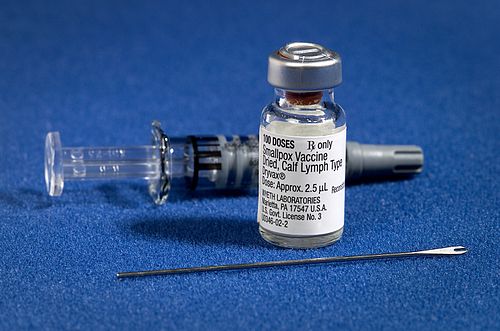
How Vaccines Work: From Lab Development to Immune Protection
Vaccines work by showing the immune system a harmless piece of a pathogen — called an antigen — so the body builds antibodies and memory cells without suffering the actual disease. Getting a vaccine to that point takes years of preclinical testing and three phases of human trials before regulators such as the FDA license it. Full protection after vaccination typically takes a few weeks, as the immune system needs time to produce lasting defenses.

ScienceArticle
Warhound: Startup Raises $200M to Genetically Engineer Dogs for the US Military
Warhound, co-founded by Colossal Biosciences' Ben Lamm and Anduril's Palmer Luckey, raised $200 million on October 22, 2026 to genetically edit and clone dogs for the US military, aiming to remove inherited diseases from breeds such as the Belgian Malinois. Independent scientists call the genetic goals technically achievable, but bioethicists warn that cloning remains inefficient and raises unresolved animal-welfare and regulatory questions.

ScienceArticle
Why the World Is Abolishing the Leap Second, and What Changes in 2027
Leap seconds, the one-second adjustments used since 1972 to keep clocks aligned with Earth's rotation, will stop entirely. The world's timekeeping authority, the International Bureau of Weights and Measures (BIPM), confirmed on 15 October 2026 that continuous UTC takes effect on 20 May 2027. The move, first agreed in principle in 2022, was accelerated after experts flagged a growing risk of a disruptive "negative" leap second.